

Table of Contents
- Why Pointer Breeds Need Purpose-Built Field Gear
- 1. GPS Collar for Hunting Dogs: Track Every Cast and Point
- 3. Hunting Dog First Aid Kit: Be Ready for Cuts, Burs, and Blowups
- 4. Hydration Gear: Fresh Water and a Collapsible Bowl
- Your Complete Hunting Dog Gear Checklist for the Field
- Frequently Asked Questions
Last Updated: October 9, 2026
Why Pointer Breeds Need Purpose-Built Field Gear
Pointer breeds run hotter, cast farther, and cover more ground than almost any other sporting dog.
At FUR MISSILE, we build apparel for the people who run these dogs, so we think about field gear the way handlers do: every item earns its place in the truck or it stays home.
The five items below cover location tracking, protection, emergency response, hydration, and handler comfort. Get these right and you can focus on the dog, not the equipment.
American Kennel Club guide to sporting dog breeds
1. GPS Collar for Hunting Dogs: Track Every Cast and Point
A GPS collar for hunting dogs is the single most important piece of field gear for any pointer breed. It combines satellite tracking with a handheld unit or phone app, so you always know where your dog is even 300 yards out in tall grass.
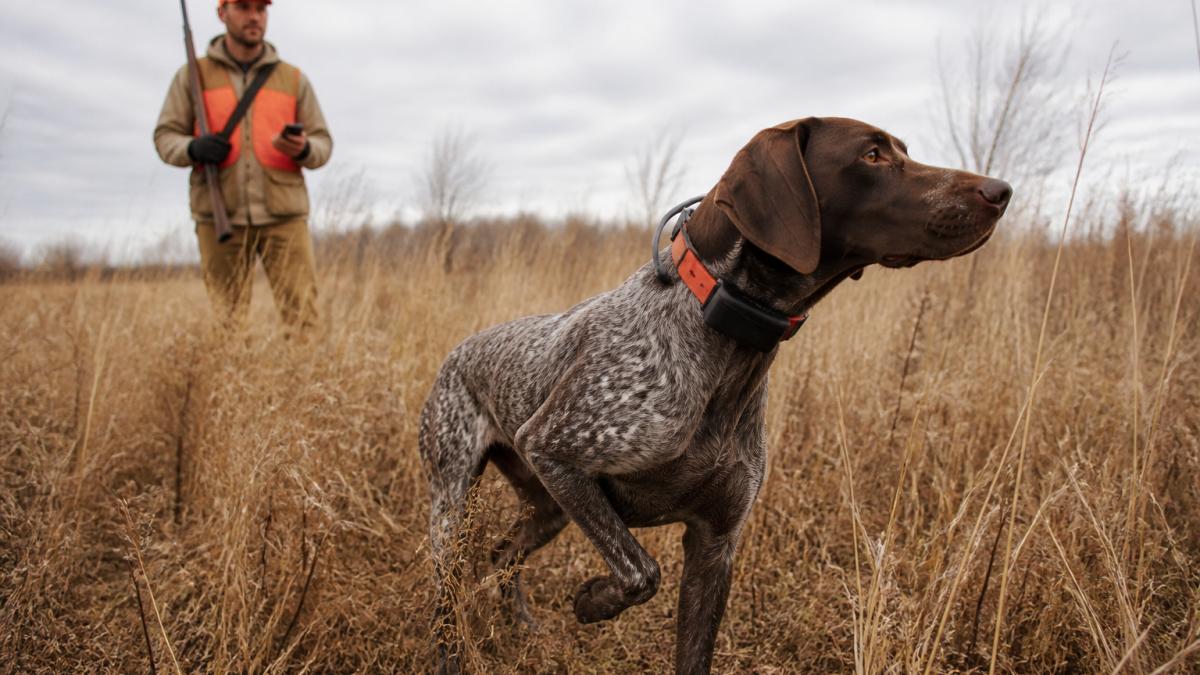
Pointer breeds cast wide by instinct. A dog on a strong cast can disappear over a rise in seconds, and a beeper collar only tells you where the dog was, not where they are now.
When you're choosing a tracking collar, weigh these factors:
- Range and update rate, how often the collar reports position and how far the signal reaches
- Battery life, a full day of field work needs a collar and a backup battery
- Beeper or tone option, useful for close-range work and pointing stance confirmation
- Fit and weight, a heavy unit slows a dog down over a long hunt
How to Fit and Field-Test a GPS Collar
- Fit the collar high on the neck, snug enough that two fingers slide under the strap but the unit will not rotate.
- Pair the collar with your handheld GPS unit or app before you leave the truck, and confirm a location lock.
- Walk the dog on a long line and check that the collar stays put through turns and stops.
- Test the beeper or tone at distance so you recognize the signal in wind.
- Carry a backup battery and confirm the collar's charge level before every hunt.
A loose collar slips over the head on a hard stop; a tight one rubs the throat raw by midday. Re-check the fit after the first 15 minutes of running, since a wet coat changes it.
(https://www.vet.cornell.edu/departments-centers-and-institutes/cornell-feline-health-center)3. Hunting Dog First Aid Kit: Be Ready for Cuts, Burs, and Blowups
A hunting dog first aid kit is a field-ready pouch for treating cuts, embedded burs, torn pads, and the heat or exhaustion that can hit a hard-charging pointer.
Field injuries rarely wait for a vet. A cut from barbed wire, a foxtail in the ear, or a pad sliced on frozen crust can turn a good day into an emergency.
A practical kit includes:
- Gauze pads and self-adhering wrap for wounds
- Antiseptic solution for cleaning cuts
- Tweezers and a comb for removing burs and foxtails
- Vet wrap and tape for pad injuries
Check the kit before each season. Replace anything opened or expired, and restock after every trip where you used supplies.
4. Hydration Gear: Fresh Water and a Collapsible Bowl
Fresh water and a collapsible bowl are non-negotiable for a pointer breed working in the heat.
Carry more water than you think you need. A working dog drinks steadily through a long hunt, and you need your own supply too.
How to handle hydration in the field:
- Offer water at every check, not just when the dog looks tired.
- Let the dog drink in small amounts rather than gulping a full bowl at once.
- Carry a backup bottle in the truck for the ride home.
- Watch for signs of overheating: heavy panting, stumbling, or refusing to run.
In cold weather, water can freeze in an open bowl.
(https://furmissle.co/products/field-tested-t-shirt) for the days the dog earns its keep and so do you- The German Shorthaired Pointer T-Shirt for breed-specific pride
- The Trust The Nose T-Shirt for handlers who let the dog do the deciding
Each one is made, packaged, and shipped in the USA, with a modern unisex fit and durable fabric that holds up hunt after hunt.


U.S. Forest Service outdoor safety and recreation guidance
Your Complete Hunting Dog Gear Checklist for the Field
Here is the prioritized field kit, ordered by what matters most for a pointer breed on a real hunt.
| Priority | Item | Why It's Essential | Lightweight Alternative |
|---|---|---|---|
| 1 | GPS collar + backup battery | Real-time location tracking | Beeper collar + bell |
| 2 | Upland hunting dog vest | Protects vitals in heavy cover | Lighter vest for warm days |
| 3 | Hunting dog first aid kit | Handles cuts, burs, blowups | Compact pouch with core supplies |
| 4 | Water + collapsible bowl | Prevents dehydration | Collapsible bottle |
| 5 | Field-ready apparel | Keeps the handler in the hunt | Breathable base layer |
Gear choices shift with the dog and the day.
Seasonal packing matters too. Warm-weather hunts call for more water and lighter layers; late-season hunts need insulation, hand warmers, and a plan for frozen ground that tears up pads.
A pointer breed will outrun, outlast, and out-hunt almost anything you put in front of it. The gear has to keep up.
Frequently Asked Questions
What gear does a pointing dog need in the field?
Every pointer needs five core items: a GPS collar for tracking, a protective upland vest for heavy cover, a canine first aid kit for cuts and burrs, a collapsible bowl with fresh water, and durable field apparel for the handler. Pointer breeds like German Shorthaired Pointers range far and fast, so a GPS collar with a backup battery is non-negotiable. Build your kit around range, coat type, and terrain, then test each piece before opening day.
How do you keep a pointer visible while hunting?
Use a GPS collar for hunting dogs with a bright LED beacon, and pair it with a high-visibility upland hunting dog vest in blaze orange. Pointer breeds often work 100 to 300 yards out in heavy cover, so visual contact is unreliable. A tracking collar shows direction and distance on a handheld unit, while the vest keeps the dog visible when it crosses a lane or holds a point. Check your state regulations for blaze orange requirements on dogs.
What first-aid supplies should you carry for a hunting dog?
A hunting dog first aid kit should include vet wrap, self-adhesive bandage, gauze pads, antiseptic wipes, tweezers for burrs and ticks, blunt-tip scissors, a tick key, and saline for eye flush. Pointer breeds push through briars and sharp stubble, so paw and chest cuts are the most common injuries. Pack it in a waterproof pouch and restock after every trip.
How can you protect a pointer's paws in rough terrain?
Protect paws with a properly fitted upland hunting dog vest that covers the chest, and consider dog boots for volcanic rock, sharp stubble, or ice. Check pads after every run for cuts, burrs, and abrasions. Carry vet wrap in your first aid kit for field repairs. Pointer breeds have tight, hard pads that handle most cover, but repeated days on abrasive ground wear them down. Rest and inspect paws daily during multi-day trips.
What should I pack for a day of upland hunting with a pointer?
Pack a GPS collar with a charged backup battery, a protective vest, a full first aid kit, at least one liter of fresh water and a collapsible bowl, a leash and long line, and your own field-ready apparel. Add gloves, a hunting knife, waste bags, and binoculars. Pointer breeds cover ground fast, so hydration and tracking come first. Use a hunting dog gear checklist before every trip so nothing gets left at the truck.