

Last Updated: November 2, 2026
Quick Summary
You can use 7 ways to remove dog hair from performance fabric: rubber gloves, squeegees, lint rollers, damp sponges, portable pet-hair removers, vacuums with upholstery attachments, and soft brushes for seams. Match the tool to the fabric texture, since rougher weaves need more grip and smooth weaves need lighter tools. Test any new tool on a hidden area first.
- Rubber gloves and electrostatic tools lift loose hair by creating friction, and slight dampness improves grip.
- A squeegee or rubber spatula pulls embedded hair from the weave when dragged at a low angle.
- Lint rollers handle quick touch-ups but won't pull deeply embedded hair from performance fabric.
- A portable pet-hair remover is best for heavy shedding and uses a rubber edge plus collection chamber.
- Treat static cling with a damp cloth pass rather than more rubbing.
Table of Contents
- Why Performance Fabric Traps Dog Hair (and Why It Matters)
- The Best Tool to Remove Pet Hair From Furniture: A Quick Comparison
- 1. Rubber Gloves and Electrostatic Tools for Loose Hair
- 2. Squeegees and Spatulas to Gather Embedded Hair
- 3. Lint Rollers and Adhesive Tape for Quick Cleanups
- 4. Damp Sponges and Microfiber Cloths for Surface Hair
- 5. Portable Pet-Hair Removers for High-Shedding Areas
- 6. How to Remove Stubborn Dog Hair From Fabric Without Damage
- Troubleshooting Static and Deeply Embedded Hair
- Frequently Asked Questions
Why Performance Fabric Traps Dog Hair (and Why It Matters)
Performance fabric is a tightly woven textile engineered to resist stains, moisture, and wear. That same tight weave is exactly why it traps dog hair so well. The fibers lock short hairs into the surface instead of letting them fall away. If you relate to being a magnet for embedded hair and outdoor debris, the Certified Burr Magnet T Shirt speaks to that.
Hunting dog owners often report this problem. For those who want to celebrate the heavy-shedding companion behind the mess, there's a Fur Missile Dog T Shirt to check out. A German Shorthaired Pointer or a Lab sheds across the couch, and a normal brush just pushes the hair deeper. The fabric holds it, and static cling keeps it there.
Here's what most guides get wrong. They treat every couch the same. But performance fabric has a different surface texture than cotton or velvet, so the tool you pick matters more than the effort you put in.
This guide covers 7 ways to remove dog hair from performance fabric. Each method fits a different situation, from a quick clean to stubborn hair buried in the seams.
American Kennel Club guide to dog shedding
The Best Tool to Remove Pet Hair From Furniture: A Quick Comparison
The best tool to remove pet hair from furniture depends on where the hair sits and what the fabric can tolerate. Loose surface hair comes up fast with a rubber edge or lint roller. Embedded hair needs a squeegee or a portable remover with more grip. On performance fabric, the deciding factor is whether the tool can lift hair without abrading the weave or the stain-resistant finish.
Use this table to match the tool to the job before you start. Dog owners comparing tools may also like The Companion T Shirt that matches their pet-focused lifestyle. Effort is rated for a standard three-seat couch.
| Tool | Best For | Effort | Fabric Risk | Typical Cost | Performance-Fabric Notes |
|---|---|---|---|---|---|
| Rubber glove | Loose hair, large areas | Low | Very low | Under $5 | Safe on smooth and textured weaves; slight dampness improves grip |
| Squeegee or rubber spatula | Embedded hair in weave | Medium | Low | $5-$15 | Best on textured and microfiber blends; keep edge clean to avoid snags |
| Lint roller or adhesive tape | Quick touch-ups | Low | Low | $5-$12 | Safe on most finishes; avoid aggressive tape on delicate coatings |
| Damp sponge or microfiber cloth | Surface hair and dust | Low | Low | $5-$15 | Wring to damp, not wet; test hidden spot first on coated fabrics |
| Portable pet-hair remover | High-shedding spots | Medium | Low with care | $15-$40 | Rubber or silicone edge plus collection chamber; empty often |
| Vacuum with upholstery attachment | Whole-couch maintenance | Medium | Low | Use existing vacuum | Use brush attachment; avoid stiff bristles on performance weaves |
| Soft brush or crevice tool | Seams and crevices | Low | Low | $5-$15 | Work loose hair out before sweeping with a glove |
A quick clean with the wrong tool wastes time and can push hair deeper. These 7 ways to remove dog hair from performance fabric match the tool to the texture, and the job gets easier.
Matching the Tool to the Fabric Texture
Smooth performance weaves work well with a rubber edge or a lint roller. Textured weaves, like many microfiber blends, hold hair in the grooves, so a squeegee pulls it out better than tape. Tightly woven performance fabric with a stain-resistant finish is the most forgiving surface for dry tools but the least forgiving of abrasive ones.
The rule is simple. The rougher the surface texture, the more grip you need. The smoother the weave, the lighter the tool can be. Before you choose, check the fabric care label for cleaning codes and any warning against solvents or excess water.
1. Rubber Gloves and Electrostatic Tools for Loose Hair
Rubber gloves and electrostatic tools lift loose hair by creating friction. Put on a clean rubber glove, dampen it slightly, and sweep your hand across the cushion in one direction. The hair gathers into clumps you can pick up.
This is the fastest method for a quick clean on pet resting spots. It costs almost nothing and works on most upholstery.
- Sweep in one direction, not back and forth
- Work in small sections so clumps stay together
- Rinse the glove when it stops gripping
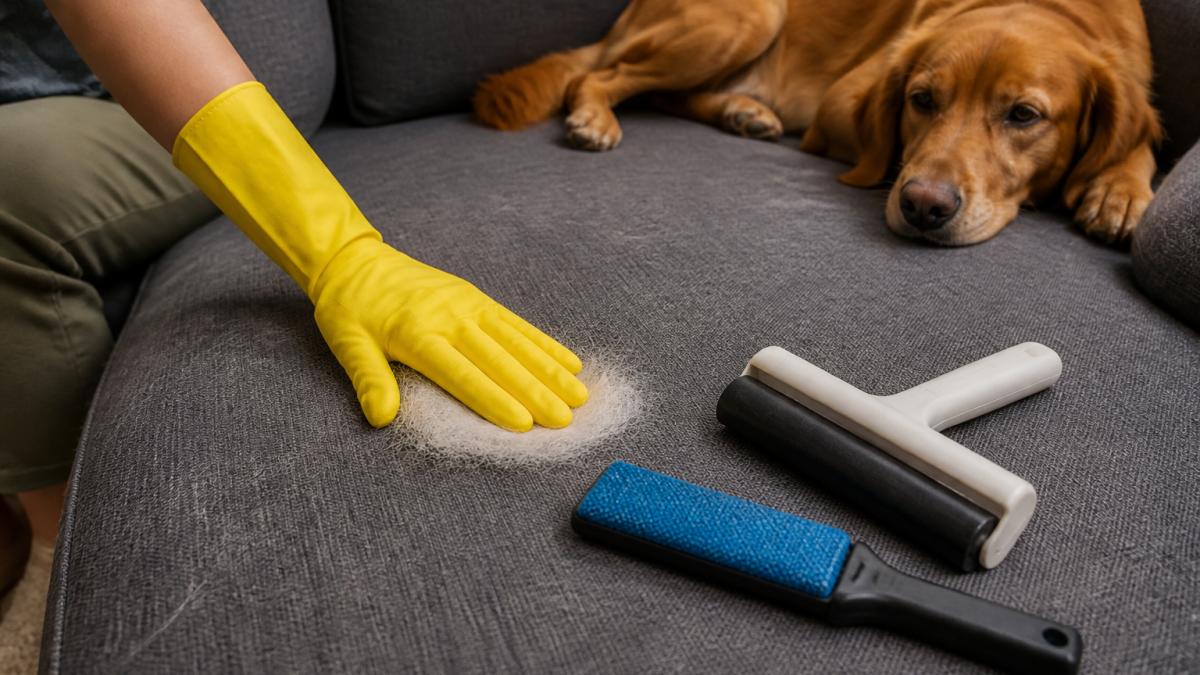
A common mistake is using a dry glove on a dry couch. A little moisture helps the rubber grip the fur. The electrostatic glove does the same job, and many people find it easier on the wrist.
2. Squeegees and Spatulas to Gather Embedded Hair
A squeegee or a rubber spatula pulls embedded hair out of the weave. Hold the edge at a low angle and drag it across the fabric. The rubber edge catches stubborn hair and rolls it into a line you can collect.
This method shines on microfiber and textured performance fabric. Light pressure works better than a hard press.
- Use a clean, dry rubber edge
- Drag in one direction to form hair clumps
- Vacuum or pick up the clumps as you go
Watch out: pressing too hard can push hair deeper into the weave. Let the rubber edge do the work, not your arm.
3. Lint Rollers and Adhesive Tape for Quick Cleanups
Lint rollers and adhesive tape are the go-to for fast touch-ups. Roll the sticky sheet across the cushion and lift surface hair in seconds. Tape works the same way on small spots and seams.
Keep a roller near the couch for daily upkeep. It handles light shedding before hair builds up.
- Roll in short strokes to keep the sheet from clogging
- Use tape for corners and seams a roller can't reach
- Swap sheets often so the adhesive stays tacky
This won't pull deeply embedded hair, but it's the best option for a quick clean between deeper sessions.
4. Damp Sponges and Microfiber Cloths for Surface Hair
A damp sponge or microfiber cloth lifts surface hair and dust in one pass. Lightly dampen the sponge, wring it out, and wipe the fabric. The moisture grabs the fur and the cloth holds it.
Microfiber cloths work well because the fibers trap hair instead of spreading it. Rinse the cloth often to keep it effective.
- Wring the sponge so it's damp, not wet
- Wipe with the grain of the fabric
- Rinse and repeat on heavy spots
Moisture is safe on most performance fabric, but check the care label first. Too much water can leave marks on some weaves. Keep it damp and you're fine.
5. Portable Pet-Hair Removers for High-Shedding Areas
A portable pet-hair remover is the best tool to remove pet hair from furniture when shedding is heavy. These handheld tools use a rubber or silicone edge plus a collection chamber. You sweep, and the hair ends up inside instead of on the floor.
They cut cleaning effort on high-shedding areas like a dog's favorite cushion.
- Best for daily use in homes with heavy shedders
- Empty the chamber before it fills up
- Clean the edge after each use
6. How to Remove Stubborn Dog Hair From Fabric Without Damage
Stubborn hair needs a careful approach, not more force. Start with a rubber edge or squeegee to loosen the hair, then follow with a damp microfiber cloth. Work in one direction and let the tools lift the fur.
For deeply embedded hair, a portable remover with a firm rubber edge helps. Avoid sharp metal tools, which can snag the weave. Readers invested in dog gear may also want to read Is High Visibility Dog Gear Worth It for Hunting?.
- Loosen first, then lift
- Keep tools clean so they grip
- Test any moisture on a hidden spot
FTC guidance on caring for textile products
Troubleshooting Static and Deeply Embedded Hair
Static cling is the main reason hair keeps sticking after you clean. A dry cloth or a light spritz of water on your tool cuts the static. Run a damp microfiber cloth over the fabric to reset it.
For hair buried deep in seams and crevices, use a soft brush or a spatula tip to work it loose. Then sweep it up with a rubber glove.
- Treat static with a damp cloth, not more rubbing
- Reach seams with a soft brush
- Clean crevices before they fill up
A prevention schedule keeps the problem small. A quick clean every few days beats a deep clean once a month.
| Problem | Fix | Impact |
|---|---|---|
| Static cling | Damp cloth pass | Hair stops sticking |
| Embedded hair | Squeegee, then lift | Pulls hair from weave |
| Seam buildup | Soft brush and glove | Clears crevices |
| Heavy shedding | Portable remover | Less daily effort |
Frequently Asked Questions
What is the most effective way to remove stubborn dog hair from fabric?
Start with a rubber-edged tool or squeegee to gather embedded hair into clumps, then lift it with a damp microfiber cloth. Work in one direction rather than scrubbing back and forth. For deeply embedded hair, follow with a portable pet-hair remover designed for upholstery. Always test any moisture or tool on a hidden area of the fabric first, since performance fabrics can vary in how they respond to friction and water.
Can you use a rubber brush to remove dog hair from performance fabric?
Yes, a rubber brush or electrostatic glove is one of the safest options for performance fabric. The rubber edge grips loose and embedded hair without pulling at the weave the way stiff bristles can. Sweep in one direction to form hair clumps, then collect and dispose of them. Avoid pressing hard on delicate weaves, and check the fabric care label for any restrictions before you start.
How do you remove dog hair from a microfiber couch?
Microfiber traps hair in its tight weave, so use a dry method first: a lint roller or rubber glove lifts surface hair quickly. For embedded hair, a squeegee or spatula gathers it into clumps you can pick up. If you use a damp cloth, wring it out well and test a hidden spot first, because some microfiber finishes are sensitive to moisture. Finish by vacuuming seams and crevices where hair builds up.
How often should I clean dog hair off performance-fabric furniture?
A quick clean two to three times a week keeps hair from working deep into the weave, especially in high-shedding areas like your dog's favorite resting spots. Do a deeper clean weekly with a rubber tool or portable remover, and vacuum seams and crevices at the same time. During heavy shedding seasons, increase the frequency. Consistent short sessions are easier on the fabric than occasional hard scrubbing.
Removing dog hair from performance fabric comes down to matching the tool to the surface and staying ahead of the buildup. At FUR MISSILE, we build apparel for people who live with fur on the furniture every day. Our gear uses premium, high-performance materials that hold up through repeated wash cycles, keeps its shape over time, and ships worldwide with tracking on every order. Get started with FUR MISSILE and wear your dog-loving life with pride.
