

Table of Contents
- Why Heavy Leather Hunting Dog Collars Weigh Down Working Dogs
- Nylon vs Leather Dog Collars: What the Field Actually Shows
- Biothane Dog Collars and Coated Webbing Explained
- Waterproof Dog Collars for Hunting Dogs in Mud, Water and Wet Vegetation
- Hunting Dog Collar Fit and Sizing: Width, Weight and Hardware
- Cleaning, Stretching and Wear: Keeping a Field Collar Serviceable
- Safety, Visibility and Material Trade-offs Beyond Nylon and Leather
- How to Choose a Lighter Collar for Your Hunting Dog
- Frequently Asked Questions
Last Updated: October 17, 2026
Why Heavy Leather Hunting Dog Collars Weigh Down Working Dogs
A wet leather collar is one of the heaviest pieces of gear on a hunting dog, and it gets heavier with every retrieve. This guide from FUR MISSILE breaks down the real alternatives to heavy leather hunting dog collars, from coated webbing to purpose-built field designs, so you can pick a collar that keeps up without dragging your dog down.
Here is the core problem most owners miss. Leather absorbs water, mud, and everything else in the marsh, then holds it against the dog's neck for the rest of the hunt. A soaked strap also stretches, dries stiff, and starts to crack if it isn't cared for. That is fine for a dog that walks a sidewalk. It is a poor match for a dog crashing through cattails for six hours.
Below, we'll cover what the field actually shows, how to size a working collar, and the maintenance habits that keep any collar serviceable. We'll also flag the safety and visibility details that separate a field collar from a fashion strap.
Nylon vs Leather Dog Collars: What the Field Actually Shows
Nylon wins on weight, drying speed, and cost, while leather wins on longevity and quiet operation. That is the honest summary of the nylon vs leather dog collars debate, and it holds up in practice.
Nylon webbing is light, dries fast, and cleans up with a hose. It also costs less than a well-made leather strap. The trade-off is that plain nylon holds odor, can fray at the edges, and makes a faint swishing sound against brush.
Leather is quiet, molds to the dog's neck, and can last years with care. It also soaks up water, gains weight when wet, and needs conditioning to stay supple. For a duck dog working wet cover, that weight penalty is the whole argument.
Where Nylon Wins and Where It Falls Short
Nylon is the better default for wet, muddy, high-frequency field work. It sheds water quickly and costs little to replace.
Where it falls short: thin nylon can rub on a hard-pulling dog, and uncoated webbing absorbs odor over time. Look for wider webbing and stitched, not glued, construction.
Biothane Dog Collars and Coated Webbing Explained
Biothane is a coated webbing material: a woven core sealed inside a waterproof synthetic coating. Biothane dog collars deliver most of leather's look with none of its water retention.
Coated webbing, sometimes sold under names like Beta material, is the same idea. The coating blocks water and mud from the core, so the collar wipes clean and dries in minutes. It stays flexible in cold weather and resists the stretching that plagues soaked leather.
The catch: coated webbing has a smoother surface, so check that the hardware is riveted or stitched securely. Cheap coatings can peel at cut edges over time.
Waterproof Dog Collars for Hunting Dogs in Mud, Water and Wet Vegetation
A waterproof dog collar for hunting dogs should shed water, resist odor, and wipe clean after a wet hunt.
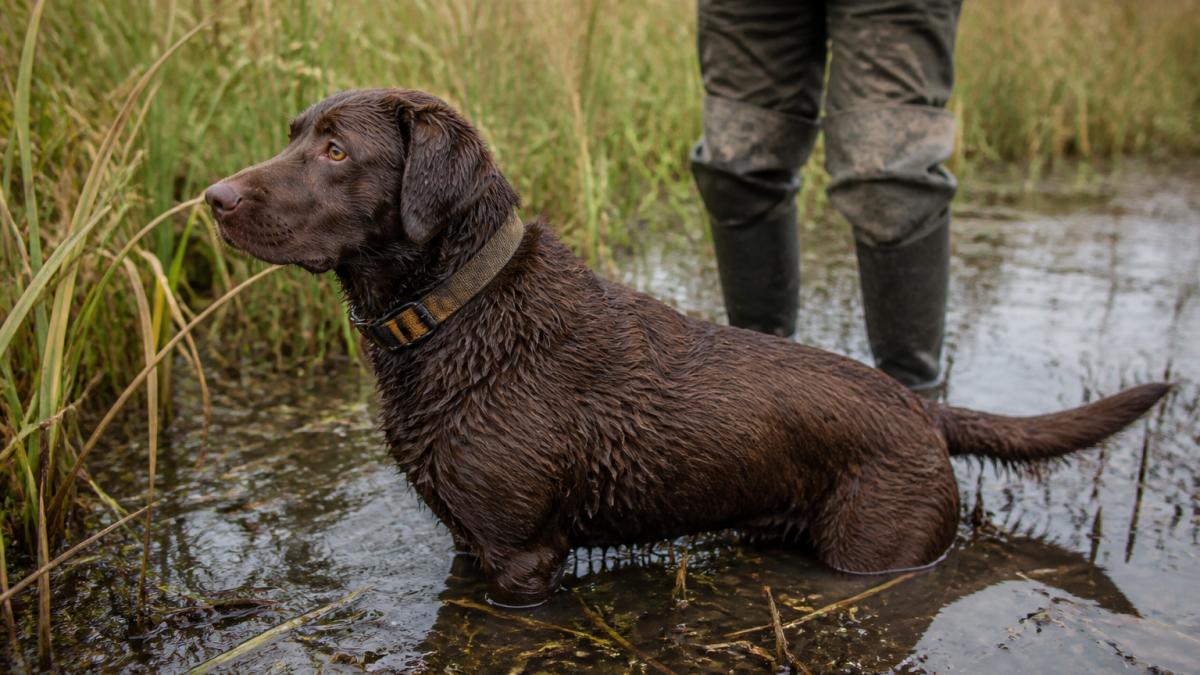
Most collar advice stops at "leather soaks up water." That is true but not useful when you are standing in a marsh at 5 a.m. deciding what to put on the dog.
Full-grain leather. Absorbs the most water of any common collar material. A soaked strap gains noticeable weight and stays damp for hours, sometimes overnight, depending on humidity.
Plain nylon webbing. Absorbs little water at the surface, but the weave traps grit and holds odor over time. It dries faster than leather but slower than a sealed strap because water clings in the fibers.
Coated webbing (Biothane-style). The waterproof coating blocks water from the woven core, so the strap takes on almost nothing. It wipes dry in minutes, sheds mud rather than trapping it, and does not hold odor the way bare webbing does.
Faux leather and PVC. Repels water and wipes clean, but can feel stiff in cold weather and may crack at flex points with heavy use.
A practical pattern many handlers follow: keep one coated-webbing collar for water and mud, and a leather collar for dry upland days when quiet matters.
If your dog works flooded timber or retrieves in cold water, a waterproof strap is not a luxury. It is the difference between a collar that is ready tomorrow and one that is still damp and stiff.
Hunting Dog Collar Fit and Sizing: Width, Weight and Hardware
Proper hunting dog collar fit and sizing means two fingers of slack, a width matched to the dog's neck and drive, and hardware that won't fail under load. Get those right and the collar stays comfortable through a full day.
On width: narrow straps suit small or short-haired dogs, while wider straps spread pressure on hard-pulling dogs. Wider also means heavier, so balance the two. On weight, coated webbing and thin nylon are the lightest options; thick leather is the heaviest, especially wet.
Measure the neck at its base, snug but not tight, then add room for two fingers. Recheck fit as a young dog fills out.
Hardware Choices for Working Dogs
Brass hardware resists rust and looks sharp, but it adds weight. Stainless steel is a strong field choice for wet work. Plastic buckles save weight but can fail under a hard pull, so reserve them for calm dogs.
A riveted D-ring and a sturdy buckle matter more than finish. Check the stitching at stress points before every season.
| Material | Weight | Water Behavior | Best For |
|---|---|---|---|
| Full-grain leather | Heaviest | Absorbs, dries slow | Dry-field upland work |
| Plain nylon | Light | Low absorb, holds odor | Budget wet-weather use |
| Coated webbing | Light | Repels water, wipes clean | Marsh, water, mud |
| Faux leather / PVC | Medium | Repels water | Casual field and daily wear |
Cleaning, Stretching and Wear: Keeping a Field Collar Serviceable
Routine cleaning is what separates a collar that lasts seasons from one that fails mid-year. Rinse any collar after a wet or muddy hunt, then dry it fully before storage.
Leather needs the most attention. Wipe off mud, let it dry away from direct heat, and condition it to prevent cracking. Never dry leather on a radiator; it stiffens and splits. Leather also stretches when soaked, so avoid leaving it wet under load.
Coated webbing and nylon are simpler: rinse, wipe, air-dry. Check for fraying at the buckle and wear at the D-ring. Replace a collar at the first sign of a compromised stitch, not after it breaks in the field.
Safety, Visibility and Material Trade-offs Beyond Nylon and Leather
Safety in the field comes down to visibility, a secure fit, and a breakaway or quick-release option where appropriate. These details matter more than brand names, and they are where most collar guides for hunting dogs stay vague.
Visibility in thick cover. A dog in cattails or switchgrass disappears fast. High-contrast colors, blaze orange, hi-vis yellow, and bright green, are easier to spot than earth tones, especially at dusk and in low light. Reflective stitching or a reflective strip helps when you sweep a light across cover or catch headlights at the truck.
Snag risks. A collar that catches on fence wire, barbed wire, or dense brush is a real hazard for a working dog. Protruding hardware, dangling tags, and loose strap ends are the usual culprits.
Breakaway versus quick-release. A breakaway collar is designed to release under load so a dog cannot strangle if the collar catches. That is a safety feature for a dog running loose in fence country, but it is the wrong choice for a dog that must stay on a lead or that you need to grab in an emergency.
Material trade-offs beyond nylon and leather. Faux leather and PVC repel water and cost less than leather, though they can feel stiff and may crack with heavy flexing. Coated webbing sits in the sweet spot for working dogs: light, waterproof, and easy to clean, with a smooth surface that sheds mud and reduces snag points.
A simple field check before you head out: put the collar on, run your hand around the inside for rough edges, tug the D-ring to test the stitching, and confirm tags sit flat. Those two minutes catch most of the failures that show up in the field.
How to Choose a Lighter Collar for Your Hunting Dog
Choosing a lighter collar comes down to matching the material to your dog's work, then getting the fit and hardware right. Use this checklist before you buy.
- Match material to conditions: coated webbing for water and mud, leather for dry upland cover
- Weigh the collar dry, then imagine it soaked; lighter wins for wet work
- Confirm two fingers of slack at the neck base
- Check for riveted or stitched hardware at stress points
- Choose high-visibility color or reflective stitching for thick cover
- Verify the buckle type suits your dog's pull strength
- Plan a rinse-and-dry routine after every wet hunt
The pattern is consistent: lighter materials, sealed against water, with solid hardware, outlast heavy leather in wet conditions. That is the case for moving on from a soaked strap.
At FUR MISSILE, we build gear for people who live the field-and-water life with their dogs, and we know how fast wet gear turns into a chore. Our apparel is made with premium, high-performance materials and domestic printing, built to hold up through repeated wash cycles and long seasons. When you're ready to gear up for the next hunt, shop our collection and wear the mission.
Frequently Asked Questions
Are nylon collars better than leather collars for hunting dogs?
It depends on the conditions. Nylon webbing is lighter, cheaper and dries faster than heavy leather, which makes it a strong pick for wet or muddy ground. The trade-off is that plain nylon soaks up water, holds odor and can fray against abrasive cover. Leather resists abrasion better when it stays dry but gets heavy and stiff when soaked. Many handlers rotate: nylon or coated webbing for wet seasons, leather for dry upland work where the dog stays mostly dry.
What is Biothane, and is it suitable for a hunting dog collar?
Biothane is a coated webbing: a woven core sealed inside a waterproof synthetic coating, often PVC-based. It does not absorb water, wipes clean in seconds and keeps its shape after repeated soakings. For hunting dogs that swim, cross creeks or work wet vegetation, that means no water retention, no lingering odor and no stretching. It is stiffer than soft leather at first, so check the width and edge finish before committing to a size.
How should a hunting dog collar fit?
You should be able to slide two fingers under the collar at the neck, no more. A collar that is too loose can slip over the head or catch on brush; one that is too tight rubs the coat and restricts breathing during hard work. Measure the neck at its widest point with a soft tape, then check the maker's size chart, since widths of 1 inch and 1.5 inches sit differently. Recheck fit as the dog's coat thickens in winter.
Which collar material is lightweight, waterproof and easy to clean?
Coated webbing such as Biothane is the closest match on all three counts. It weighs less than a comparable full-grain leather collar, does not take on water, and rinses clean of mud and field debris with a hose. Coated nylon is a close second at a lower price. Plain nylon is light and cheap but absorbs water and odor, and leather is the heaviest option once wet. Weigh the collar on a kitchen scale before you buy if weight matters.