

Table of Contents
- Canvas vs Synthetic Dog Gear: Quick Comparison
- Durability and Tear Resistance
- Water Resistance, Drying Time, and Climate Considerations
- The Best Fabric for Hunting Dog Collars
- Nylon vs Polyester Dog Gear Durability
- How to Clean Canvas Dog Accessories
- Comfort, Skin Sensitivity, and Safety Standards
- Cost, Sustainability, and End-of-Life Disposal
- Frequently Asked Questions
Last Updated: September 19, 2026
Canvas vs Synthetic Dog Gear: Quick Comparison
Canvas is a woven cotton or linen fabric known for breathability and natural feel, while synthetic dog gear is made from petroleum-based polymers like nylon and polyester. The core difference between canvas and synthetic dog gear comes down to how each material handles water, abrasion, and long-term wear in the field.
Here's the short version: canvas absorbs water and dries slowly, but it breathes and ages gracefully. Synthetics shed water fast and resist abrasion, but they can trap heat and degrade under UV exposure over time.
| Factor | Canvas | Synthetic (Nylon/Polyester) |
|---|---|---|
| Water resistance | Low, absorbs moisture | High, sheds water |
| Drying time | Slow | Fast |
| Abrasion resistance | Moderate | High |
| Breathability | Excellent | Varies by weave |
| UV resistance | Good | Degrades without treatment |
| Cost | Moderate | Budget to premium |
| End-of-life | Biodegradable | Recyclable in limited programs |
Durability and Tear Resistance
Synthetic webbing outperforms canvas in raw tear strength, but canvas holds its own when the weave is tight and the fabric is heavy. The deciding variable is tensile strength per unit of weight, not the material name alone.
Ballistic nylon and heavy polyester webbing carry high tensile loads without stretching. Canvas duck cloth, especially in heavier weights, resists punctures from brush and briars because the fibers are densely packed. Where canvas fails is at stress points: stitching pulls through faster when the fabric is wet.
A common mistake is assuming thicker always means stronger. A loosely woven heavy canvas can tear before a tight, lighter synthetic weave. Check the textile weave and the hardware durability, not just the fabric weight.
Water Resistance, Drying Time, and Climate Considerations
Synthetics dry dramatically faster than canvas, and that gap widens in cold, wet conditions. Water absorption is the key metric: canvas can hold a significant amount of moisture relative to its weight, while nylon and polyester absorb very little.
For handlers in humid or rainy climates, quick-dry synthetics reduce the risk of a wet collar or harness causing chafing on a working dog. In dry, cold climates, canvas performs well because it doesn't stiffen or crack the way some coated synthetics can.
Climate-specific recommendation: if you hunt in sustained rain or cross creeks regularly, choose synthetic. If you hunt in dry upland cover and value breathability, canvas is the better call.
The Best Fabric for Hunting Dog Collars
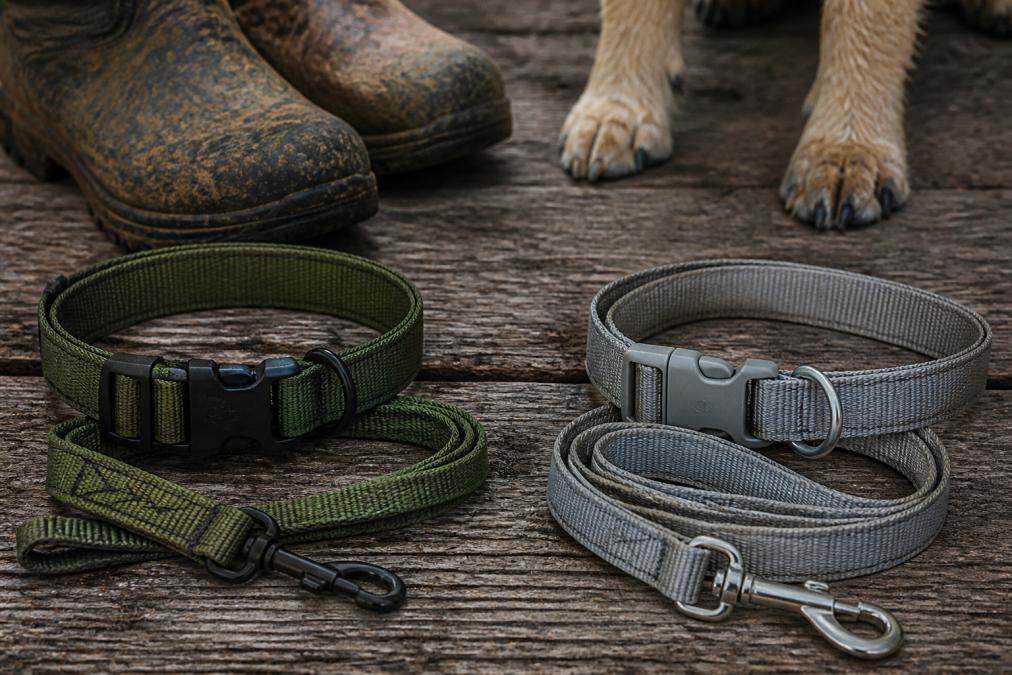
The best fabric for hunting dog collars is tightly woven nylon webbing for wet or heavy-cover work, and heavy canvas for dry upland hunts where comfort matters most. Neither is universally superior; the choice depends on terrain, weather, and how the dog works.
Nylon webbing resists abrasion from briars and rock, holds hardware securely, and doesn't stretch under load. That combination makes it the default for hard-running pointers and retrievers. Canvas collars feel softer against the neck and don't chafe as quickly on dogs with sensitive skin, but they need more frequent cleaning.
Nylon vs Polyester Dog Gear Durability
Nylon and polyester are both petroleum-based synthetics, but they behave differently at the molecular level, and those differences show up on the dog after a season or two. Nylon (polyamide) has a higher tensile strength and noticeably more elasticity. Polyester (PET) has a stiffer molecular backbone that resists stretching, holds shape, and shrugs off UV radiation better than untreated nylon.
The practical consequences break down like this:
- Tensile strength: Nylon webbing generally carries more load per unit of width than polyester of the same weave. A 1-inch nylon strap will typically out-pull a 1-inch polyester strap of comparable construction.
- Elasticity: Nylon stretches under load and recovers. That stretch absorbs shock when a dog hits the end of a leash, which is why nylon is common in leashes and long lines. Polyester barely stretches, so shock transfers straight to the hardware and the dog's neck.
- UV resistance: Unstabilized nylon degrades in sunlight, fibers chalk, weaken, and lose color. Polyester resists UV degradation far better, which is why marine applications (dock lines, sail covers) lean polyester. For a collar that lives on an outdoor dog year-round, polyester usually outlasts nylon in direct sun.
- Chemical and moisture resistance: Polyester resists oils, salt, and most field chemicals better than nylon. Nylon absorbs a small amount of moisture (typically a few percent by weight) and can weaken slightly when saturated, though it recovers fully when dry.
- Abrasion: Both resist abrasion well. Nylon's slight give can help it slide over briars rather than snag, while polyester's stiffness can abrade faster against sharp rock.
The practical rule: nylon for shock absorption and wet-cover strength, polyester for sun exposure and shape retention. If your dog swims and runs heavy cover, nylon.
A common mistake is buying "heavy-duty" items without checking the fiber. A thick polyester strap can feel rugged and still fail faster under shock than a thinner nylon one. Read the fiber content tag, not just the width.
How to Clean Canvas Dog Accessories
Cleaning canvas dog accessories takes three steps: brush off dry debris, hand-wash in cool water with mild soap, then air-dry completely away from direct heat. Skip the washing machine; agitation breaks down the weave faster than field use does.
- Brush off mud and burrs while the canvas is dry
- Fill a basin with cool water and a few drops of mild soap
- Scrub gently with a soft brush, focusing on soiled areas
- Rinse until the water runs clear
- Air-dry flat, away from radiators and direct sun
- Re-wax or re-treat if the canvas loses its water resistance
Comfort, Skin Sensitivity, and Safety Standards
- Residual dyes and finishing agents left on cheap imported webbing, azo dyes and formaldehyde-based finishes are the common offenders.
- Metal hardware, nickel and chrome-plated buckles and D-rings are a frequent trigger for contact allergy in dogs, the same way they are in people.
- Trapped moisture and friction, a wet synthetic strap that doesn't breathe creates the warm, damp environment where yeast and bacteria flourish, which then irritates skin.
- Rigid edges and rough webbing, a stiff synthetic strap that doesn't soften with wear can rub a hot spot on the neck or under the front legs.
Practical steps to reduce risk:
- Rinse any new synthetic apparel in cool water before first use to strip surface finishing chemicals.
- Choose nickel-free or coated hardware if your dog has reacted to metal before.
- Rotate between two collars so one can dry fully while the other is worn.
- Check under the collar weekly for redness, thinning hair, or a rash, early signs of contact irritation.
The bottom line on comfort: canvas wins on softness and breathability, uncoated synthetics win on drying speed, and the real irritants are usually dyes, finishes, and hardware, not the polymer family itself. Address those first before you blame the fabric.
Cost, Sustainability, and End-of-Life Disposal
Canvas costs less upfront in most cases, but synthetics often deliver more seasons of service per dollar in wet conditions. The real cost picture depends on how long each material survives your specific use. Pricing depends on quantity, dates, and delivery. Shop our website for current prices.
Frequently Asked Questions
Does synthetic gear dry faster than canvas for hunting dogs?
Yes, synthetic materials like nylon and polyester dry significantly faster than canvas. Synthetic fibers absorb very little water, so a wet collar or leash can dry in under an hour in open air. Canvas duck cloth absorbs water into its cotton fibers and may take several hours or overnight to dry completely. For hunters who cross creeks or work in wet fields, this drying speed difference matters for pet safety and gear longevity.
Which material is more resistant to mold and mildew for outdoor dog gear?
Synthetic materials resist mold and mildew better than canvas because they absorb almost no moisture. Canvas holds water in its fibers, creating conditions where mold can grow if the apparel is stored damp. If you choose canvas apparel, dry it fully in direct sunlight before storing it. Synthetic webbing and hardware also resist the mildew smell that builds up in canvas products left in a truck or apparel bag after a wet hunt.
Is canvas good for dogs with sensitive skin?
Canvas can work for dogs with sensitive skin, but it depends on the weave and finish. Unbleached, dye-free canvas duck cloth has a lower allergic reaction profile than heavily dyed or chemically treated fabrics. Synthetic gear made from hypoallergenic nylon or polyester is often a safer choice for dogs prone to contact irritation. Whichever you pick, check for rough edges, metal hardware that rubs, and tight fits that cause chafing during long field sessions.
What is the best fabric for hunting dog collars?
The best fabric for hunting dog collars depends on your conditions. Nylon webbing offers the highest tensile strength and abrasion resistance for dogs pushing through brush. Polyester resists UV degradation better and holds color longer in direct sun. Canvas provides breathability and a classic look but absorbs water and needs regular cleaning. For most hunters, a nylon or polyester collar with sturdy hardware and a wide profile distributes load better during leash pulls. Shop our website for current prices.
Choosing the right material for your dog's gear comes down to matching fabric strengths to your actual hunting conditions, not chasing a single "best" answer. At FUR MISSILE, we build bold, breed-specific apparel for handlers who live this life, with premium materials engineered for comfort and long-term durability. Our designs are printed domestically, ship worldwide with tracking, and hold their shape through repeated wash cycles. Shop FUR MISSILE and gear up for the mission.