

Last Updated: October 23, 2026
Quick Summary
An upland hunting vest is worn by the hunter to carry shells, water, and birds, while a tactical dog harness is worn by the dog for control and load-carrying. You will likely need both, but for different reasons, since each serves a different body.
- A good vest separates shell loops, pockets, and a game bag with a drainable, wipe-clean liner.
- Strap vests breathe better in heat, while traditional vests offer more storage and pockets.
- Fit two fingers under the chest strap and check that the vest stops before the tail base.
- A front D-ring gives more steering control, while a back D-ring suits a dog that handles well.
- Buy the harness first if dog control is your weak point; buy the vest if your setup is a jacket.
Table of Contents
- Upland Hunting Vest vs Tactical Dog Harness: The Core Difference
- Upland Hunting Vest Features That Actually Matter in the Field
- Traditional Vests vs Strap Vests: Which Style Fits Your Hunt
- Hunting Dog Vest Fit: What to Check Before You Buy
- Finding the Best Dog Vest for Upland Hunting
- The Best Harness for Hunting Dogs: Attachment Points and Control
- Dog Safety, Heat Management, and Field Hazards
- Which One Should You Pick? A Use-Case Decision Guide
- Frequently Asked Questions
Upland Hunting Vest vs Tactical Dog Harness: The Core Difference
An upland hunting vest is a garment the hunter wears to carry shells, water, and birds, while a tactical dog harness is worn by the dog for control and load-carrying.
Here is the short answer: you will likely need both, but for different reasons. The vest keeps your ammunition and game organized on your torso.
Below, we break down what matters in each piece of gear, how fit works for both, and which to prioritize if your budget only stretches to one purchase.
Upland Hunting Vest Features That Actually Matter in the Field
Three features decide whether a vest works for you: storage layout, shell access, and how the load sits on your body. Everything else is preference.
Storage, Shell Loops, and Game Bags
A good upland vest separates three types of cargo. Shell loops hold ammunition where your hand falls naturally during a flush. Pockets carry water, gloves, and a first aid kit. The game bag holds birds without soaking your back.
Look for a game bag with a drainable, wipe-clean liner. A common mistake is buying a vest with a huge single pocket and no dedicated shell loops.
Weight Distribution and Mobility
Weight distribution matters more than total capacity. A vest loaded with two boxes of shells, a full water bottle, and three birds gets heavy fast. Wide, padded shoulder straps and a waist belt transfer that load to your hips, not your neck.
Mobility comes down to cut. A vest that rides too low catches on brush and restricts your swing. Check that you can mount a shotgun without the vest pulling across your chest.
Traditional Vests vs Strap Vests: Which Style Fits Your Hunt
Traditional vests and strap vests differ mainly in coverage and airflow.
Strap vests win in heat and long walks: less fabric against your torso means better breathability, and many hunters find them cooler early in the season.
| Style | Best For | Trade-off |
|---|---|---|
| Traditional vest | Cold weather, heavy loads, lots of pockets | Warmer, heavier when loaded |
| Strap vest | Early season, long walks, hot conditions | Less storage, fewer pockets |
| Minimal belt bag | Fast, light hunts | No torso storage at all |
Neither style is universally better. Match the vest to your season and your typical hunt duration, not to what looks best on a shelf.
Hunting Dog Vest Fit: What to Check Before You Buy
Hunting dog vest fit comes down to three checkpoints: chest clearance, shoulder range, and length. A vest that fails any of these will rub, restrict gait, or snag.
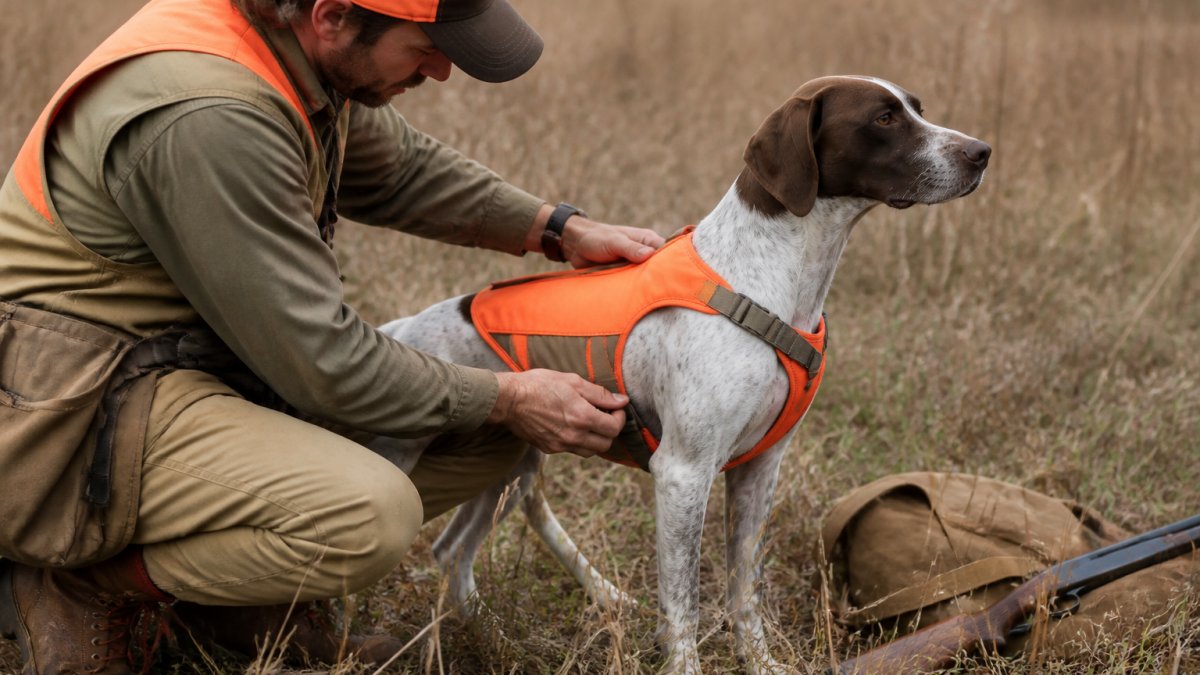
Start with the chest. You should fit two fingers under the chest strap without forcing it. Next, watch the dog walk and trot.
Adjustability is the other half of fit. Chest and girth straps let you account for a dog's weight changes across the season, whether it loses condition in cold weather or gains a little in the off-season.
Finding the Best Dog Vest for Upland Hunting
The best dog vest for upland hunting balances protection, breathability, and visibility. Upland cover is abrasive. Switchgrass, multiflora rose, and briars will tear up a dog's chest and ears over a full season.
Look for these features:
- Abrasion-resistant chest panel to protect against brush and stubble
- Breathable mesh or vented side panels so the dog does not overheat
- High-visibility color so you can track the dog in thick cover
- A sturdy handle on the back for lifting the dog over fences or out of water
One contrarian point worth raising: a heavy neoprene vest can run too warm for upland work. Forum hunters have noted that neoprene suits waterfowl and cold conditions better than dry-field hunting, where a lighter, more breathable vest often performs better.
The Best Harness for Hunting Dogs: Attachment Points and Control
The best harness for hunting dogs combines a secure fit with functional attachment points, but fit and placement matter more than the feature list. A tactical dog harness typically adds a metal D-ring, a reinforced handle, and sometimes MOLLE-style webbing. What separates a harness that works in upland cover from one that rubs or restricts gait is how those elements sit on the dog.
Sizing and Adjustment
Measure girth at the widest part of the ribcage and chest depth from behind the front legs to the sternum. Most manufacturers size by girth range, not weight, because two dogs of the same weight can have very different chest depths.
Check adjustment again after the dog has trotted and worked for a few minutes. Straps that felt snug at the truck can loosen or shift once the dog moves through cover.
Attachment Points and Placement
Attachment points to check:
- Front and back D-rings for leash options and different control needs. A front D-ring gives you more steering control on a pulling dog; a back D-ring is better for a dog that already handles well and needs a clear line.
- A padded, reinforced handle for lifting and steadying the dog. The handle should sit over the shoulders, not the middle of the back, so lifting does not twist the spine.
- Webbing loops for a small tracking unit or ID tag. Keep the tracking unit high on the back and close to the body so it does not swing or snag.
- Metal hardware rather than plastic buckles at load-bearing points. Plastic is fine for adjustment points, but the D-ring and handle anchors should be metal.
Control is where a tactical harness earns its place. A handle lets you steady a dog at a flush or lift it over a fence without grabbing the collar, a real safety improvement in rough terrain. But placement matters: a handle too far back gives less leverage and pulls the harness off-center when you lift.
Compatibility With Collars, GPS, Bells, and Leashes
A harness should not interfere with a collar, GPS or tracking device, bell, or leash.
Test the full setup before the season: collar, tracking unit, bell, and leash attached, then watch the dog trot and turn.
There is a limit, though. A tactical harness is not the right choice for a casual walk around the block. A standard harness handles daily exercise fine.
Dog Safety, Heat Management, and Field Hazards
Heat is the biggest field hazard for a working dog, and gear makes it worse.
Watch for these warning signs during a hunt:
- Excessive panting that does not settle during a break
- Thick, ropy drool
- Wobbling or reluctance to move
- Gums that look bright red or, in serious cases, pale
Stop, shade the dog, and offer water at the first sign. Heat stress escalates quickly in a driven dog that will not quit on its own.
Other hazards worth planning around: barbed wire, chest abrasions from stubble, and eye injuries from brush. A vest with a chest panel helps with abrasions.
Which One Should You Pick? A Use-Case Decision Guide
You will likely need both, but the priority depends on your hunt. An upland hunting vest is worn by the hunter to carry shells, water, and birds. A tactical dog harness is worn by the dog for control and load-carrying.
Use this guide:
- You hunt without a dog: Skip the harness entirely. Invest in a traditional or strap vest that matches your season and load.
- You have a young or high-drive dog: Prioritize the harness first. Control and safety matter more than your own storage in the first season.
- You hunt hot, early-season cover: Choose a breathable strap vest for yourself and a light, vented dog vest or harness.
- You hunt cold, late-season fields: A traditional vest with full coverage works well, and a neoprene dog vest becomes more reasonable.
Side-by-Side Cost, Care, and Lifespan
Cost and lifespan differ between the two categories. A hunter's vest typically lasts many seasons with basic care: brush off dirt, spot-clean the game bag liner, and hang it to dry. A dog vest or harness sees far more abrasion and usually needs replacing sooner, especially with a hard-charging dog.
Care routines differ too. A hunter's vest is cleaned at season's end and stored dry. A dog harness needs checking after every hunt for frayed webbing, bent hardware, and rubbed straps, because a field failure is a control problem, not just a gear problem.
A Simple Decision Tree
- Do you hunt with a dog? If no, buy the vest and skip the harness.
- If yes, is your dog young, high-drive, or new to field work? If so, buy the harness first for control and safety.
- If your dog already handles well, buy the vest that matches your season and load, then add a light harness or vest for the dog.
- If you hunt hot, early-season cover, choose breathable options for both you and the dog.
- If you hunt cold, late-season fields, choose fuller coverage for you and a neoprene dog vest for the dog.
Frequently Asked Questions
What is the best dog vest for upland hunting?
There is no single best pick, because the right vest depends on your dog's build, coat, and the cover you hunt. Look for breathable material, a fit that clears the shoulders, and a cut that stays clear of the tail. Neoprene adds warmth but can run hot on mild days, so a lighter skid-plate style often works better for early-season upland hunting. Measure your dog's chest and neck before ordering.
Can a tactical dog harness be used for upland hunting?
Yes, with caveats. A tactical dog harness gives you a sturdy handle and leash attachment points for control, which helps in heavy brush. What it does not give you is bird storage, shell loops, or the abrasion protection a dog vest offers against thorny cover. Many handlers run a harness for control and skip the vest, or use a vest with a built-in handle instead.
Does an upland hunting vest carry gear for the hunter or the dog?
Both exist, and mixing them up is a common mistake. A hunter's upland hunting vest carries shells, water, and birds, and it goes on your body. A dog vest or tactical dog harness goes on the dog and carries little or nothing. When comparing an upland hunting vest vs a tactical dog harness, you are comparing two different pieces of gear for two different wearers.
How should a hunting dog vest fit?
It should sit snug without restricting the shoulders, since that is where a dog's stride comes from. You want room to slide two fingers under the chest strap and no rubbing at the armpits. Check that the vest clears the tail and does not ride up when the dog runs. Recheck the fit after a few hunts, because wet fur and weight loss during the season change how it sits.
Sorting out field gear for you and your dog comes down to one question: which piece is doing the real work on your hunt? Get that right, and everything else follows. At FUR MISSILE, we build bold, high-performance apparel for people who live for this, with premium materials, USA-based printing, and designs made to survive repeated wash cycles and hard seasons. Shop our hunting dog apparel and wear the mission, whether you are in the field or on the couch with fur on the furniture.
