

Table of Contents
- Why USA-Made Apparel Holds Up Over Time
- Fabrics That Hold Their Shape Through Wash After Wash
- How to Identify Quality Clothing Before You Buy
- How to Make Clothes Last Longer: Care Habits That Work
- How to Wash Graphic Tees Without Ruining the Print
- Construction Details That Signal USA-Made Quality
- Common Mistakes That Shorten Apparel Life
- Conclusion: Choose Well, Care Well, Wear Longer
- Frequently Asked Questions
Last Updated: October 12, 2026
Why USA-Made Apparel Holds Up Over Time
The best maintains shape and quality over time for usa-made apparel comes down to one unglamorous truth: better fabric, better construction, and better care habits. At FUR MISSILE, we build our gear around that idea. This guide breaks down what actually keeps clothing looking sharp for years.
Here's the part most guides skip. Shape loss is rarely a mystery. It comes from three predictable places:
- Fiber quality. Long-staple cotton and tight-knit blends resist stretching far better than loose, short-fiber fabric.
- Construction. Reinforced seams and stable collars hold their line through repeated wash cycles.
- Care routine. Heat is the enemy. Hot water and high dryer settings break down fibers faster than anything else.
Get those three right and a good shirt stays a good shirt. Get them wrong and even premium apparel gives up early.
That's the theory. Here's what it means in practice for anyone buying usa-made apparel.
Fabrics That Hold Their Shape Through Wash After Wash
Cotton-polyester blends and ringspun cotton hold their shape best, especially when the knit is tight and the fiber is long-staple. Pure cotton can work well too, but only if it's a quality knit and you wash it cool.
So what should you actually look for in fabrics that hold their shape?
- Ringspun cotton. Softer, stronger, and less prone to pilling than standard cotton.
- Cotton-poly blends. The polyester adds memory, so the garment springs back instead of stretching out.
- Tri-blends. A cotton-poly-rayon mix drapes well and resists shrinkage, though it can pill if you dry it hot.
- Heavyweight knits. A denser knit holds structure better than a thin, floppy one.
The thing nobody tells you about fabric weight is that heavier isn't automatically better. A 5-ounce shirt in tight ringspun cotton often outlasts a 6-ounce shirt in loose, cheap yarn. Density matters more than the number on the label.
For hunting dog owners who are outside in the field all day, that density is what keeps a shirt from stretching at the shoulders after a long hike.
How to Identify Quality Clothing Before You Buy
You can spot quality clothing in about thirty seconds by checking four things: the fabric feel, the seams, the collar, and the print. How to identify quality clothing comes down to these quick checks, and they work whether you're shopping online reviews or standing in a store.
Run through this checklist before you buy:
- Feel the fabric. It should feel substantial, not papery or slick.
- Check the side seams. Look for double-stitched or reinforced seams, not single loose lines.
- Test the collar. A ribbed collar with a bit of recovery snaps back when you tug it.
- Inspect the print. A quality screen print sits in the fabric, not on top of it like a plastic sheet.
- Look at the hem. A clean, even hem signals care in manufacturing.
- Read the tag. Fiber content tells you more than any marketing claim.
The Federal Trade Commission's textile labeling rules require accurate fiber content and country-of-origin disclosure, so a tag that clearly states domestic manufacturing is a claim a company stands behind.
How to Make Clothes Last Longer: Care Habits That Work
The single biggest habit that makes clothes last longer is washing in cold water and skipping the dryer. Heat is what shrinks cotton, cracks prints, and wears down elastic. Cold wash plus air dry can add years to a garment.
How to make clothes last longer comes down to a handful of habits:
- Wash cold. Cold water cleans fine and protects fibers.
- Turn garments inside out. This shields the outer surface and any print from friction.
- Use less detergent. Excess soap leaves residue that dulls fabric.
- Air dry when you can. If you must use a dryer, choose low heat.
- Wash less often. Spot-clean and air out between wears when possible.
A common mistake is overloading the washer. A packed drum creates friction that pills and stretches fabric. Give clothes room to move.
How to Wash Graphic Tees Without Ruining the Print
The right way to wash graphic tees is simple: turn them inside out, wash cold, and never put them in a hot dryer. That routine protects the screen print and keeps the design from cracking or peeling.
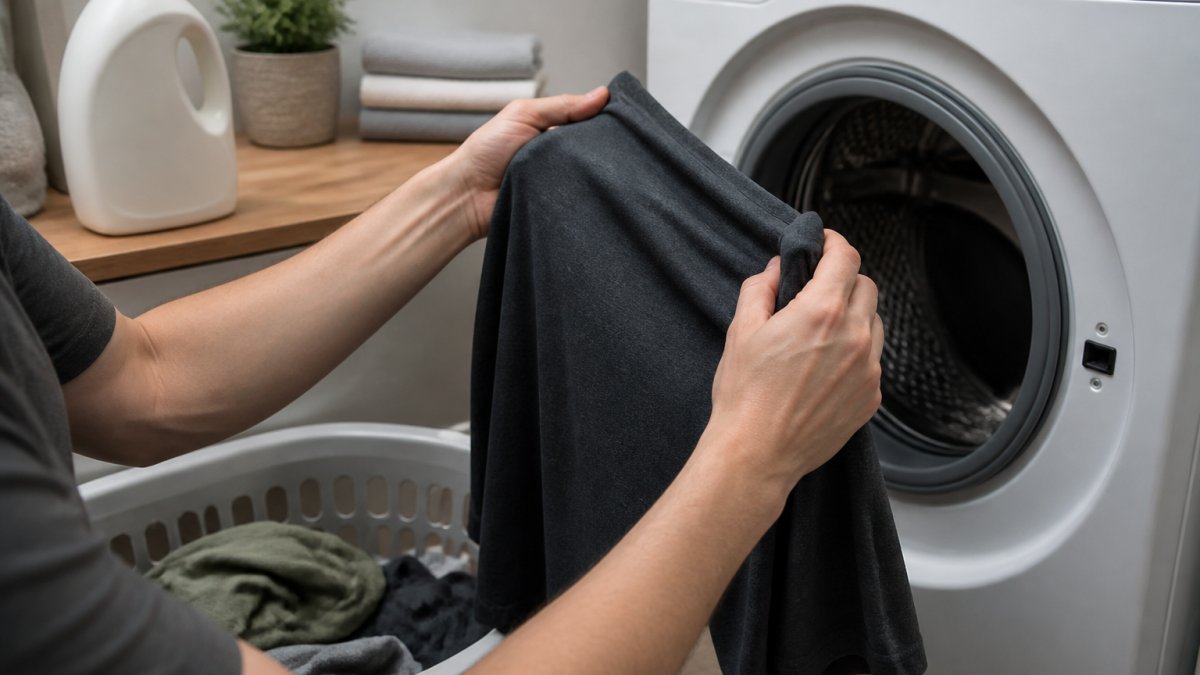
Follow these steps to wash graphic tees without wrecking the design:
- Turn the shirt inside out so the print faces inward.
- Wash on a cold, gentle cycle with like colors.
- Skip fabric softener, which can break down print adhesives.
- Air dry, or use the lowest dryer setting.
- Iron inside out if needed, never directly on the print.
For anyone with a shedding GSP or a muddy field dog, this matters. You'll be washing these shirts constantly, and a print that survives repeated cycles is the whole point of buying quality in the first place.
Construction Details That Signal USA-Made Quality
Reinforced seams, ribbed collars, and domestically printed designs are the clearest signals of quality construction. These details cost more to produce, which is exactly why they separate durable apparel from disposable apparel.
Here's what to inspect:
- Double-needle stitching at hems and shoulders resists pulling.
- Taped neck and shoulder seams prevent stretching at stress points.
- Ribbed collars with spandex recover their shape instead of going wavy.
- Side-seamed construction fits better and holds shape longer than tubular cuts.
- Domestic printing keeps quality control closer to home.
FUR MISSILE prints domestically and builds our apparel for long-term durability, so the design you love on day one still looks right after a season of use.
Common Mistakes That Shorten Apparel Life
The mistakes that shorten apparel life are almost always care errors, not manufacturing flaws. Hot water, high-heat drying, and overdosing detergent do more damage than most people realize.
Watch out for these:
- Washing everything on hot. It shrinks cotton and fades color.
- Drying on high. Heat breaks down fibers and cracks prints.
- Overloading the machine. Friction pills and stretches fabric.
- Using too much detergent. Residue dulls and stiffens clothes.
- Storing damp garments. Mildew weakens fibers permanently.
| Mistake | What It Does | The Fix |
|---|---|---|
| Hot water wash | Shrinks cotton, fades color | Wash cold |
| High-heat dry | Cracks prints, weakens fibers | Air dry or low heat |
| Overloading washer | Pills and stretches fabric | Wash smaller loads |
| Too much detergent | Leaves dulling residue | Use less soap |
| Storing damp | Causes mildew damage | Dry fully first |
Fix these five habits and most apparel problems disappear.
Conclusion: Choose Well, Care Well, Wear Longer
The apparel that keeps its shape is the apparel you choose carefully and care for deliberately. Better fabric and construction start the story, and smart washing habits finish it.
If you want gear built to survive the mission, FUR MISSILE offers premium high-performance materials, unique pet-inspired designs, and domestic printing you can trust. Our pieces are made to keep their shape and quality over time, wash after wash.
Shop FUR MISSILE and gear up with apparel that lasts.
Frequently Asked Questions
Does USA-made apparel actually last longer than overseas alternatives?
USA-made apparel often lasts longer because domestic manufacturers tend to use higher-grade fabrics and stricter quality control. The difference shows up in details like double-stitched seams, reinforced collars, and prints that survive dozens of wash cycles. That said, longevity still depends on how you care for the garment. Even premium USA-made apparel will break down faster if you wash it in hot water or dry it on high heat.
How can I tell if a screen print will hold up over time?
Run your finger across the print. A quality screen print sits smoothly on the fabric without thick, rubbery edges that peel. Check for even color coverage with no cracks or thin spots. Also look at where the print meets the fabric: if it feels like a plastic layer ready to lift, it will likely crack after a few washes. Prints cured properly during manufacturing bond with the fabric and stay flexible.
What is the best way to store apparel to preserve its shape?
Hang structured items like jackets and button-downs on sturdy hangers to prevent shoulder stretching. Fold knits and tees rather than hanging them, since gravity pulls knit fabrics out of shape over time. Keep stored items in a cool, dry place away from direct sunlight, which fades dyes and weakens fibers. Avoid cramming garments into tight spaces, as compression creates permanent creases and distorts seams.
How do you keep T-shirts from losing their shape after washing?
Wash tees in cold water on a gentle cycle and turn them inside out first. Skip the dryer or use low heat, because high heat shrinks cotton and breaks down elastic fibers in the collar. Hang or lay flat to dry. If you notice a collar starting to stretch, a quick soak in cold water followed by flat drying can help it recover. Rotating your tees between wears also gives fibers time to bounce back.